
Custom Software vs Off-the-Shelf Solutions: Where and When to Use?
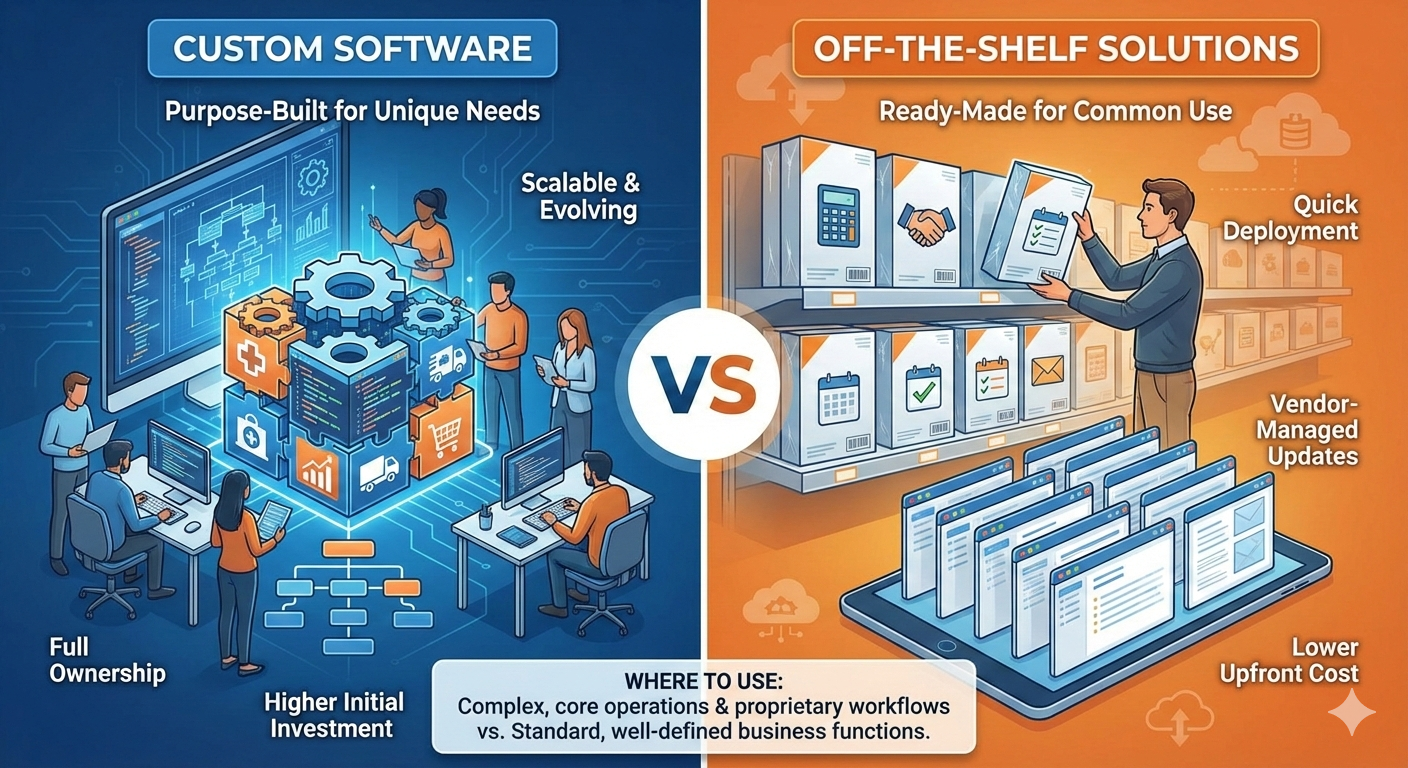
Custom Software vs Off-the-Shelf Solutions: Where and When to Use?
Choosing between custom software and an off-the-shelf solution is similar to selecting the right business investment. You can opt for a ready-made option that works reasonably well today, or invest in a tailored solution designed specifically around your needs. Both approaches have their advantages—but choosing the wrong one can lead to inefficiencies, rising costs, and long-term limitations.
Understanding where each option fits best is key to making a smart, future-ready decision.
Custom Software
Custom software is designed and developed specifically to meet the unique requirements of a particular business or organization. Unlike off-the-shelf solutions, it is built around your workflows, goals, and operational processes—ensuring the software supports how your business actually functions.
What Makes Custom Software Different
Purpose-Built from the Ground Up
Custom software is developed to align directly with your business strategy and operational needs. Every feature serves a defined purpose, ensuring the system works seamlessly within your organization rather than forcing teams to adapt to generic limitations.
Designed to Evolve with Your Business
As your business grows or changes, custom software can be enhanced with new features and capabilities. This flexibility ensures long-term scalability without disrupting existing operations.
Focused on Real Business Challenges
Each component is created to support your team’s workflows and improve customer experience. By eliminating unnecessary features, custom software delivers efficiency, clarity, and measurable business value.
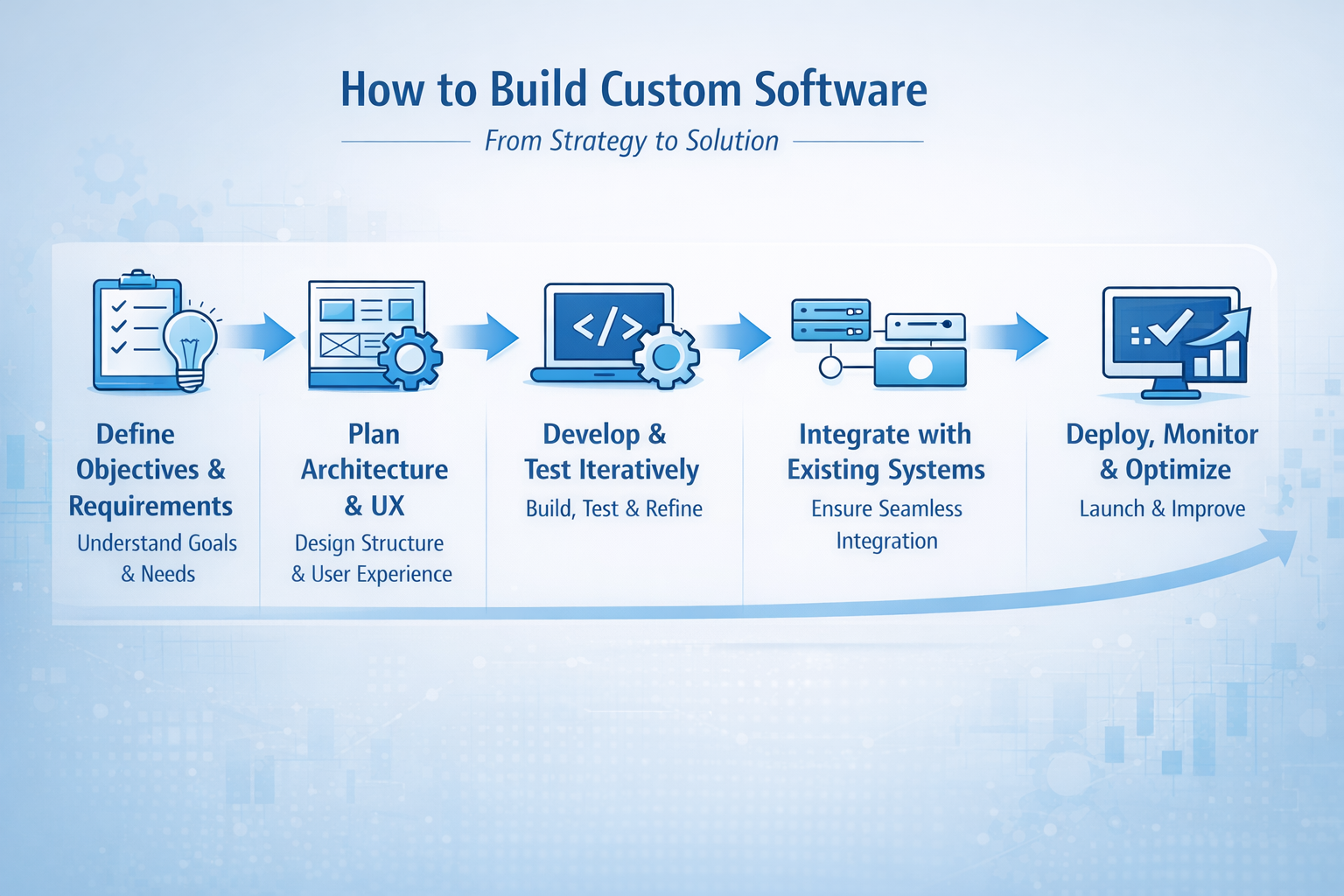
How to Build Custom Software
Building custom software is more than just writing code—it’s about developing a solution that aligns with your business objectives, supports your processes, and grows with your organization. A structured development approach ensures long-term value rather than short-term fixes.
-
Define Business Objectives and Requirements
The process begins with a clear understanding of your goals. This includes identifying the challenges the software should address, the users it will serve, and the outcomes you expect. Well-defined requirements keep development aligned with business priorities.
-
Plan the Architecture and User Experience
Once requirements are finalized, the system architecture and user experience are designed. This stage focuses on scalability, performance, and usability—ensuring the software is both intuitive for users and technically robust for future growth.
-
Develop and Test Iteratively
Custom software is built in stages, allowing for continuous testing and refinement. This iterative approach helps identify issues early, incorporate feedback, and maintain high quality throughout development.
-
Integrate with Existing Systems
One of the biggest advantages of custom software is seamless integration. The solution is designed to work smoothly with your current tools, databases, and platforms, reducing manual work and improving efficiency.
-
Deploy, Monitor, and Optimize
After deployment, the software is closely monitored to ensure reliability and performance. Continuous optimization and enhancements allow the system to adapt to evolving business needs and user expectations.
What Is Off-the-Shelf Software?
Off-the-shelf software refers to ready-made software products designed to serve a broad range of users and common business needs. These solutions are built for the general market and can be purchased, installed, and used immediately without custom development.
Instead of being tailored for one organization, off-the-shelf software follows standardized workflows that work well across industries.
Key Characteristics of Off-the-Shelf Software
Pre-Built and Ready to Use
The software is already developed and tested, enabling quick deployment with minimal setup.
Designed for Common Use Cases
It addresses widely shared needs such as accounting, customer relationship management, project tracking, and communication.
Lower Initial Cost
Because development costs are distributed across many users, off-the-shelf solutions are typically more affordable upfront.
Vendor-Managed Updates and Support
The software provider handles maintenance, security updates, and feature enhancements, reducing internal workload.
Common Examples
Examples include CRM platforms, accounting software, email marketing tools, and project management applications used by organizations worldwide.
Limitations to Consider
While convenient, off-the-shelf software may not fully align with unique business processes. Organizations often need to adapt their workflows to fit the software, and customization options are usually limited.
When Off-the-Shelf Software Makes Sense
Off-the-shelf solutions are ideal when:
- Requirements are standard and well-defined
- Speed of implementation is important
- Budget constraints are a priority
- Advanced customization is not essential
Difference Between Custom Software and Off-the-Shelf Software
The choice between custom software and off-the-shelf software depends on how closely the solution must align with your business goals, processes, and long-term plans.
| Aspect | Software | Custom Off-the-Shelf Software |
| Purpose | Built for a specific business | Designed for general use |
| Customization | Fully customizable | Limited customization |
| Development Time | Longer development cycle | Ready to use immediately |
| Initial Cost | Higher upfront investment | Lower upfront cost |
| Scalability | Easily scalable | Limited by vendor plans |
| Integration | Seamless system integration | May face integration issues |
| Ownership & Control | Full ownership and control | Controlled by software vendor |
| Maintenance | Managed by development team | Handled by vendor |
| Competitive Edge | Unique to your business | Same features as competitors |
Where to Use Custom Software vs Off-the-Shelf Software
Selecting the right software depends on your operational complexity, budget, and growth strategy. Below are common scenarios where each option is most effective.
Where Custom Software Is Commonly Used
- Enterprise Operations – A logistics company building a custom system for route optimization and real-time fleet tracking.
- Healthcare Platforms – Hospital management systems tailored for patient workflows and regulatory compliance.
- Fintech Applications – Payment or lending platforms requiring custom security, compliance, and risk logic.
- Large-Scale E-commerce – Retailers using custom solutions for pricing, inventory, and fulfillment management.
- SaaS Products
Startups building proprietary platforms to sell as products.
Why custom software works here:
Standard tools cannot fully support complex, business-critical workflows.
Where Off-the-Shelf Software Is Commonly Used
- Accounting & Finance – Tools like QuickBooks or Tally
- Customer Management – CRMs such as HubSpot or Zoho
- Project Management – Platforms like Trello, Asana, or Jira
- Email Marketing – Tools such as Mailchimp
- Office Productivity – Google Workspace or Microsoft 365
Why off-the-shelf software works here:
These solutions are mature, reliable, and optimized for common business needs.