
ERP Software Explained for Non-Technical People
What is ERP software?
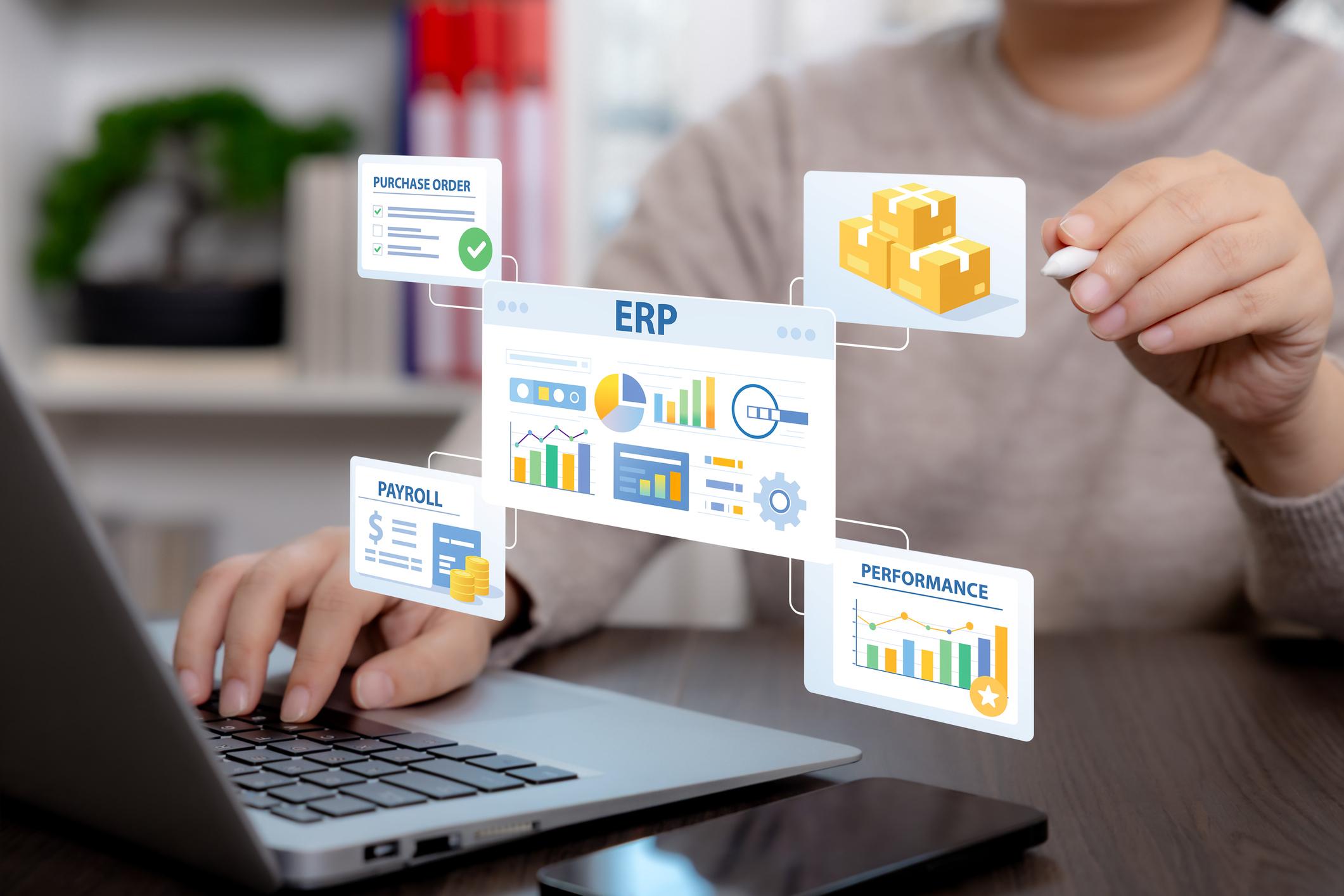
ERP (Enterprise Resource Planning) software is a system that helps businesses manage and automate their daily operations in one centralized platform. Instead of using separate tools for accounting, inventory, human resources, sales, and customer management, ERP software integrates everything into a single system.
Think of ERP as the central brain of a company. It collects information from different departments and organizes it in one place so that teams can access accurate data whenever they need it.
For example, when a sale is made, the ERP system can automatically update inventory, generate an invoice, record the transaction in accounting, and notify the sales team.
Why Businesses Use ERP Software
Businesses use ERP systems to simplify processes, improve efficiency, and reduce manual work. When all departments share the same system, information flows smoothly and decisions become faster and more accurate.
Key reasons companies adopt ERP software include:
- Centralized Data Management – All business data is stored in one system.
- Improved Productivity – Automates repetitive tasks and reduces manual work.
- Better Decision Making – Real-time data helps management make informed decisions.
- Enhanced Collaboration – Different departments can easily share and access information.
- Scalability – Supports business growth as operations expand.
Key Modules of an ERP System
ERP software usually includes several modules that manage different areas of a business. Each module focuses on a specific department but works together with the rest of the system.
- Accounting and Finance
Manages financial transactions, invoicing, expenses, and financial reporting. - Inventory Management
Tracks product stock levels, manages warehouses, and monitors product movement. - Human Resources (HR)
Handles employee records, payroll, attendance, and recruitment processes. - Sales and Customer Management
Manages leads, sales orders, customer data, and billing. - Procurement and Supply Chain
Helps businesses manage suppliers, purchase orders, and product deliveries.
How ERP Works in Simple Terms
ERP connects all departments through a shared database. Whenever a new action occurs in one department, the system automatically updates the related information across the entire organization.
For example:
- A customer places an order.
- The ERP system records the order in sales.
- Inventory automatically updates the stock level.
- Accounting generates the invoice.
- Management can view the transaction in reports.
This real-time data flow helps companies operate more efficiently and reduces the chances of errors.
Who Should Use ERP Software?
ERP systems are useful for businesses of all sizes, including:
- Small Businesses looking to organize operations and reduce manual tasks
- Medium-Sized Companies needing better coordination between departments
- Large Enterprises managing complex operations and large volumes of data
Industries such as manufacturing, education, healthcare, retail, logistics, and finance widely use ERP software.
Benefits of ERP for Growing Businesses
Implementing ERP software offers several long-term benefits:
- Improved efficiency and automation
- Accurate and real-time business insights
- Better financial control
- Enhanced customer service
- Streamlined workflows across departments
With ERP, businesses gain better visibility, control, and scalability, which supports sustainable growth.
Summary
ERP software is not just a technical tool—it is a powerful solution that helps businesses run smoothly and efficiently. By integrating multiple business processes into one system, ERP allows organizations to save time, reduce errors, and make smarter decisions.
For companies aiming to grow and stay competitive, adopting an ERP system can be a game-changing step toward digital transformation.