
How AI Is Changing Software Development
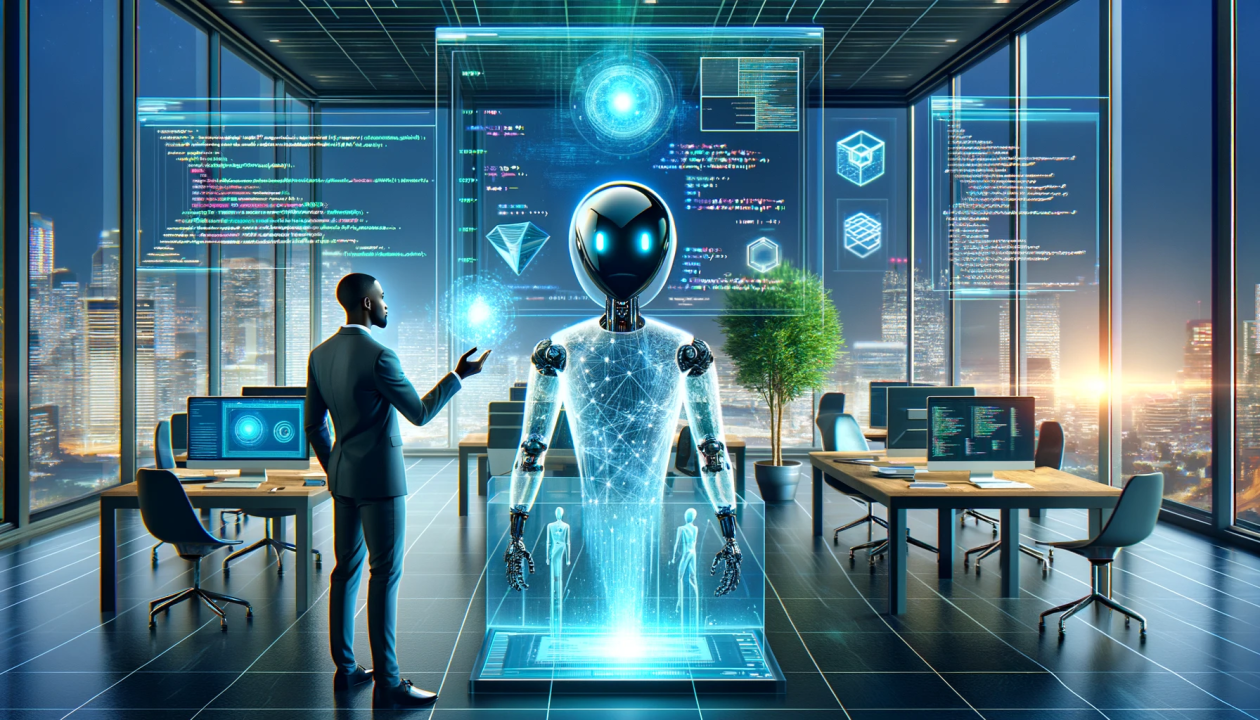
Artificial Intelligence (AI) is revolutionizing the software development landscape by transforming traditional processes into faster, smarter, and more efficient workflows. What once required significant manual effort and time can now be accomplished with greater speed and precision through AI-powered tools and technologies.
From writing code to testing, debugging, and deployment, AI is streamlining every stage of the development lifecycle. Intelligent coding assistants help developers generate code, suggest improvements, and identify errors in real time, significantly reducing development time. Automated testing tools ensure that applications are thoroughly tested across multiple scenarios, improving reliability and minimizing human error.
Beyond development, AI also plays a crucial role in enhancing decision-making by analyzing vast amounts of data and providing actionable insights. It enables teams to predict potential issues, optimize performance, and deliver more user-centric solutions.
Businesses that embrace AI-driven development gain a strong competitive advantage. They benefit from increased productivity, reduced operational costs, faster time-to-market, and improved software quality. Moreover, AI empowers organizations to innovate continuously, adapt to changing market demands, and deliver smarter, more scalable digital solutions.
As AI technology continues to evolve, it is not only reshaping how software is built but also redefining the future of the entire tech industry.
Smarter and Faster Development
AI-powered development tools are significantly reducing the time required to build software. Intelligent code assistants can suggest entire code snippets, detect syntax errors in real time, and even generate functional modules based on requirements.
Developers no longer need to spend hours writing repetitive code. Instead, they can focus on building core features and solving complex challenges. This leads to faster project delivery, shorter development cycles, and improved team efficiency.
Additionally, AI tools help standardize coding practices, ensuring consistency across projects and reducing technical debt over time.
Improved Code Quality
One of the biggest advantages of AI in software development is its ability to improve code quality. AI-driven tools can scan codebases to identify bugs, security vulnerabilities, and inefficiencies early in the development process.
These tools use machine learning models trained on large datasets to detect patterns that humans might miss. As a result, developers can fix issues proactively rather than reactively.
AI also helps enforce best practices, making applications more stable, scalable, and secure—an essential requirement for modern businesses handling sensitive data.
Automation of Repetitive Tasks
Repetitive and time-consuming tasks such as testing, debugging, and deployment can now be automated using AI. Automated testing tools can simulate multiple user scenarios, identify failures, and generate reports instantly.
Continuous Integration and Continuous Deployment (CI/CD) pipelines powered by AI ensure smoother releases with minimal human intervention. This reduces the chances of errors and accelerates time-to-market.
By automating routine work, teams can dedicate more time to innovation, strategy, and improving user experience.
Enhanced User Experience
AI enables developers to create highly personalized and intuitive user experiences. Applications can analyze user behavior, preferences, and interactions to deliver tailored content and recommendations.
Features like chatbots, voice assistants, and smart search functionalities improve customer engagement and provide real-time support. These AI-driven interactions make applications more user-friendly and efficient.
As a result, businesses can build stronger relationships with their customers and improve retention rates.
Data-Driven Decision Making
AI empowers organizations to make informed decisions by analyzing vast amounts of data quickly and accurately. Developers can use these insights to understand user behavior, identify trends, and optimize application performance.
With predictive analytics, businesses can anticipate user needs and adjust their strategies accordingly. This leads to better product development, improved customer satisfaction, and increased ROI.
Data-driven development ensures that every decision is backed by real insights rather than assumptions.
Predictive Maintenance and Support
AI can monitor system performance in real time and predict potential failures before they occur. By analyzing patterns and historical data, AI systems can identify anomalies and alert developers in advance.
This proactive approach reduces downtime, enhances system reliability, and ensures a seamless user experience. It also minimizes maintenance costs and improves overall operational efficiency.
Businesses can maintain high availability of their applications without unexpected disruptions.
The Future of Software Development
The future of software development lies in the collaboration between humans and AI. While AI handles repetitive tasks and data analysis, developers can focus on creativity, innovation, and strategic planning.
Emerging technologies such as low-code and no-code platforms powered by AI are making software development more accessible. Even non-technical users can now build basic applications with minimal effort.
As AI continues to evolve, it will play an even bigger role in shaping how software is built, deployed, and maintained.
Why AI Is Important for Software Development
In today’s fast-paced digital environment, Artificial Intelligence (AI) is no longer optional—it has become a critical component of modern software development. Businesses are under constant pressure to deliver high-quality applications quickly while maintaining performance, security, and scalability. AI helps meet these demands effectively.
AI significantly enhances development efficiency by automating repetitive and time-consuming tasks such as code generation, testing, and debugging. This allows developers to focus on innovation and solving complex problems rather than routine work.
It also improves accuracy and reliability by identifying errors and vulnerabilities early in the development process. With AI-driven insights, teams can make better decisions, optimize performance, and reduce the risk of system failures.
Another key advantage of AI is its ability to analyze large volumes of data. This enables developers to build smarter, more personalized applications that align with user behavior and business goals. As a result, companies can deliver better user experiences and increase customer satisfaction.
Moreover, AI supports faster time-to-market by accelerating development cycles and streamlining workflows. Businesses can launch products quickly, adapt to market changes, and stay ahead of competitors.
Key Benefits of AI in Software Development
- Faster development and reduced time-to-market
- Improved code quality and fewer errors
- Automation of repetitive and manual tasks
- Enhanced security and vulnerability detection
- Data-driven insights for better decision-making
- Personalized and improved user experiences
- Increased scalability and performance