
How Automation Can Reduce Manual Work by 70%
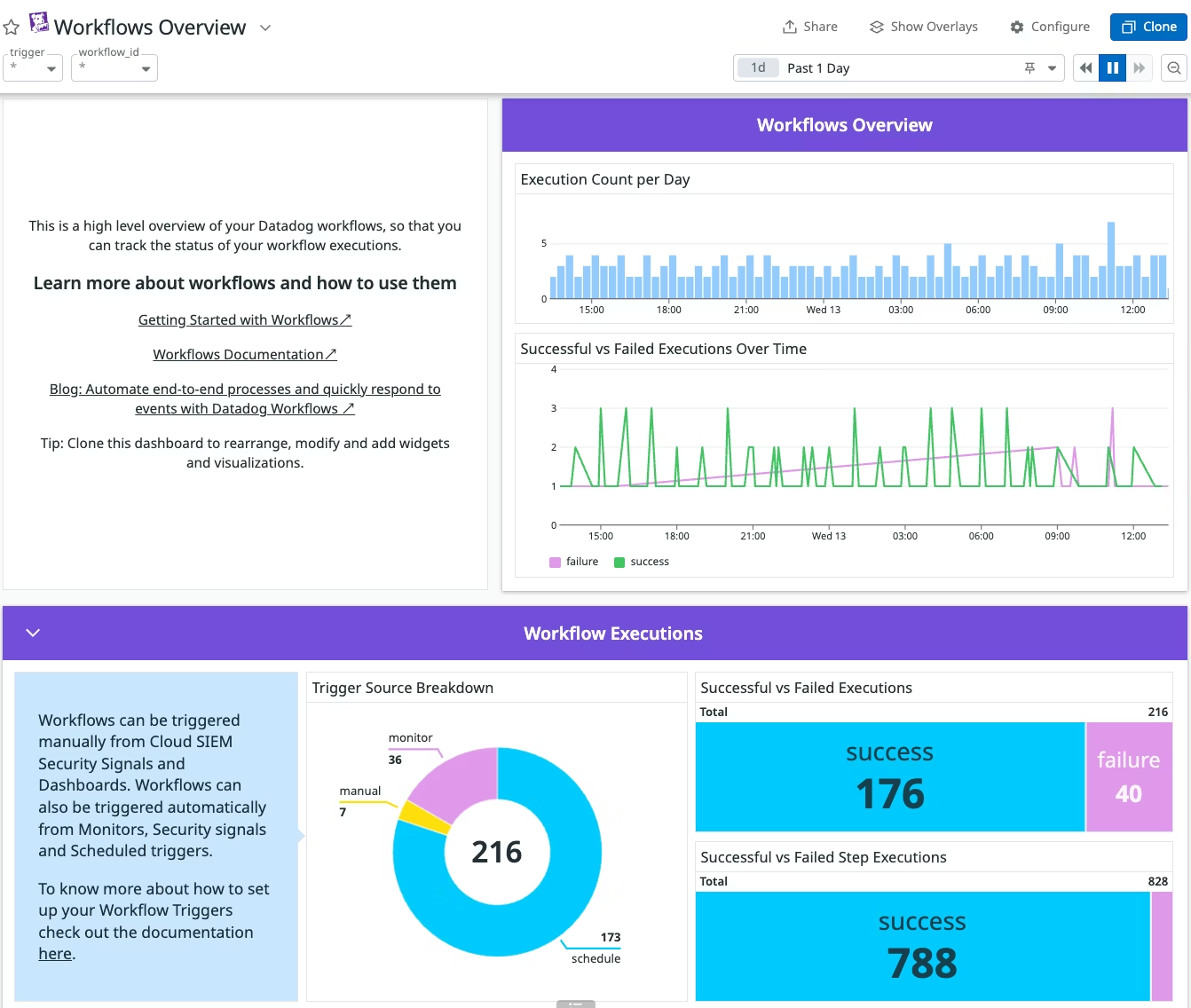
In today’s fast-paced digital world, businesses are constantly looking for ways to improve efficiency, reduce costs, and stay competitive. One of the most powerful solutions to achieve this is automation.
Automation is no longer a luxury—it’s a necessity. By automating repetitive and time-consuming tasks, businesses can reduce manual work by up to 70%, allowing teams to focus on strategic and high-value activities.
What is Business Automation?
Business automation involves using technology to perform tasks with minimal human intervention. These tasks can include data entry, email communication, reporting, customer follow-ups, and much more.
Instead of spending hours on repetitive work, automation tools handle these processes quickly and accurately.
How Automation Reduces Manual Work
1. Eliminates Repetitive Tasks
Tasks like data entry, report generation, and email responses can be automated.
Example:
- Automatically sending welcome emails to new customers
- Generating daily or weekly reports without manual effort
This alone can save dozens of hours each week.
2. Reduces Human Errors
Manual processes are prone to mistakes, especially when tasks are repetitive.
Automation ensures:
- Consistent data handling
- Accurate calculations
- Error-free workflows
This leads to better decision-making and fewer costly errors.
3. Streamlines Business Processes
Automation connects different systems and workflows.
Example Workflow:
- User fills out a form → Data enters CRM → Automated email is sent → Sales team gets notified → Follow-up reminder is scheduled
Everything happens automatically without manual intervention.
4. Improves Productivity
Employees spend less time on routine tasks and more on:
- Strategy
- Customer relationships
- Innovation
This improves overall team productivity and morale.
5. Speeds Up Operations
Automation works 24/7 without breaks.
- Instant responses to customers
- Faster data processing
- Real-time updates
This significantly improves business efficiency.
Advanced Use Cases of Automation
To go beyond basic automation, businesses are now implementing advanced solutions:
AI-Powered Automation
- Predict customer behavior
- Smart recommendations
- Automated decision-making
Workflow Automation
- Multi-step approvals
- Task assignments
- Status tracking
Marketing Automation
- Personalized campaigns
- Lead scoring
- Behavioral targeting
Data & Analytics Automation
- Real-time dashboards
- Performance tracking
- Automated insights
Real Impact: How 70% Reduction Happens
Let’s break it down:
- Manual Work Before Automation: 100 hours/week
- After Automation: 30 hours/week
- Time Saved: 70 hours/week
That’s a 70% reduction in manual workload, which can be redirected toward growth-focused activities.
Industry-Specific Examples
Education Sector
- Automated attendance tracking
- Student notifications
- Fee reminders
E-commerce
- Order processing
- Inventory updates
- Customer communication
Healthcare
- Appointment scheduling
- Patient records management
- Billing automation
Corporate Businesses
- HR onboarding workflows
- Payroll processing
- Internal communication systems
ROI of Automation
Automation is not just about saving time—it directly impacts your bottom line.
Key ROI Benefits:
- Reduced labor costs
- Faster turnaround time
- Increased revenue opportunities
- Better resource utilization
Many businesses recover their automation investment within 3–6 months.
Common Mistakes to Avoid
When implementing automation, avoid these pitfalls:
- Automating inefficient processes without optimization
- Choosing tools without proper research
- Lack of team training
- Ignoring data security and compliance
- Over-automation leading to loss of human touch
Tools That Enable Automation
Some popular automation tools include:
- CRM platforms
- Email marketing software
- Workflow automation tools
- AI chatbots
Selecting the right combination of tools ensures maximum efficiency and scalability.
Future of Automation
The future of automation is driven by:
- Artificial Intelligence (AI)
- Machine Learning (ML)
- No-code/Low-code platforms
Businesses that adopt automation early gain a significant competitive advantage in their industry.
Final Thoughts
Automation is not about replacing people—it’s about empowering them to do more meaningful work. By reducing manual work by up to 70%, businesses can operate smarter, faster, and more efficiently.
It enables organizations to scale operations, improve accuracy, and deliver better experiences to customers—all while reducing operational burden.
Ready to Automate Your Business?
We help businesses implement smart automation solutions tailored to their needs—from CRM automation to complete workflow optimization.
👉 Get in touch today and start transforming your business with automation.